What is sattu?
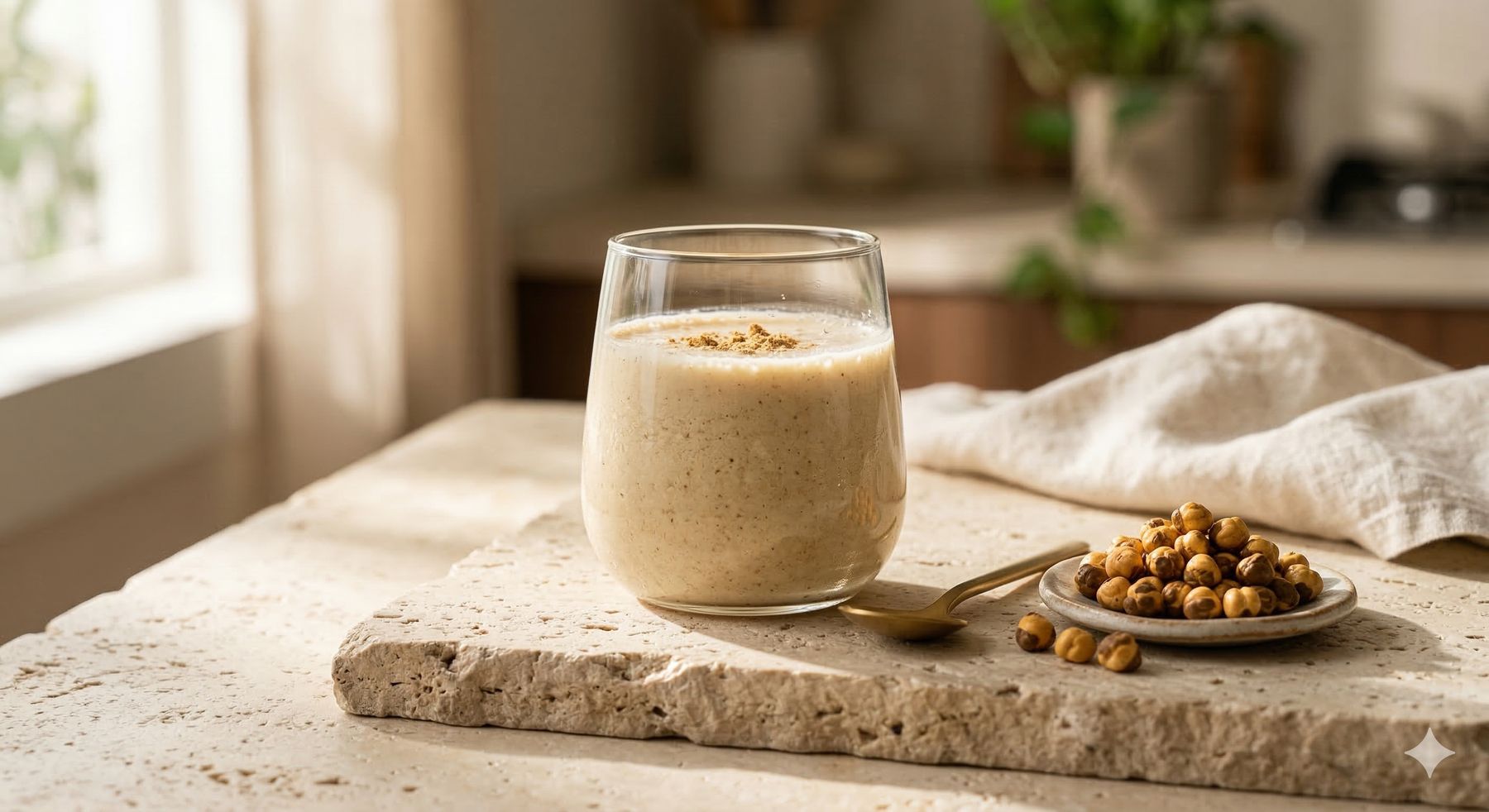
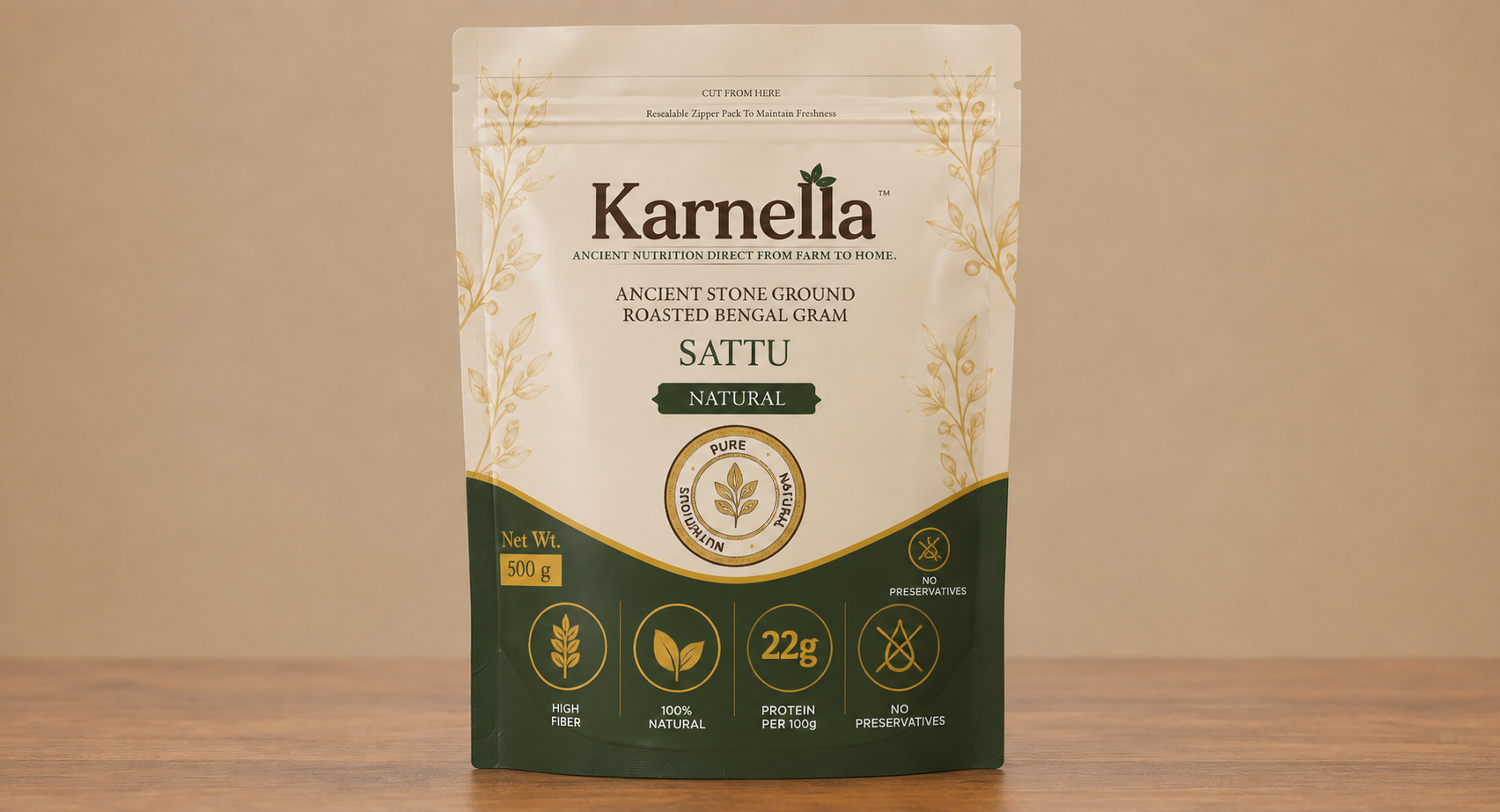
Sattu is flour made from roasted Bengal gram (kala chana). The chana is cleaned, dry-roasted and then ground into a fine, nutty powder. Because it is roasted before grinding, it is ready to eat: you can stir it straight into water or milk without cooking.
It has been an everyday food in Bihar, Jharkhand and eastern Uttar Pradesh for generations, drunk as a cooling summer drink and used in dishes like sattu paratha and litti. Some regions also make sattu from barley or other grains, but chana sattu is the most common.
Sattu nutrition
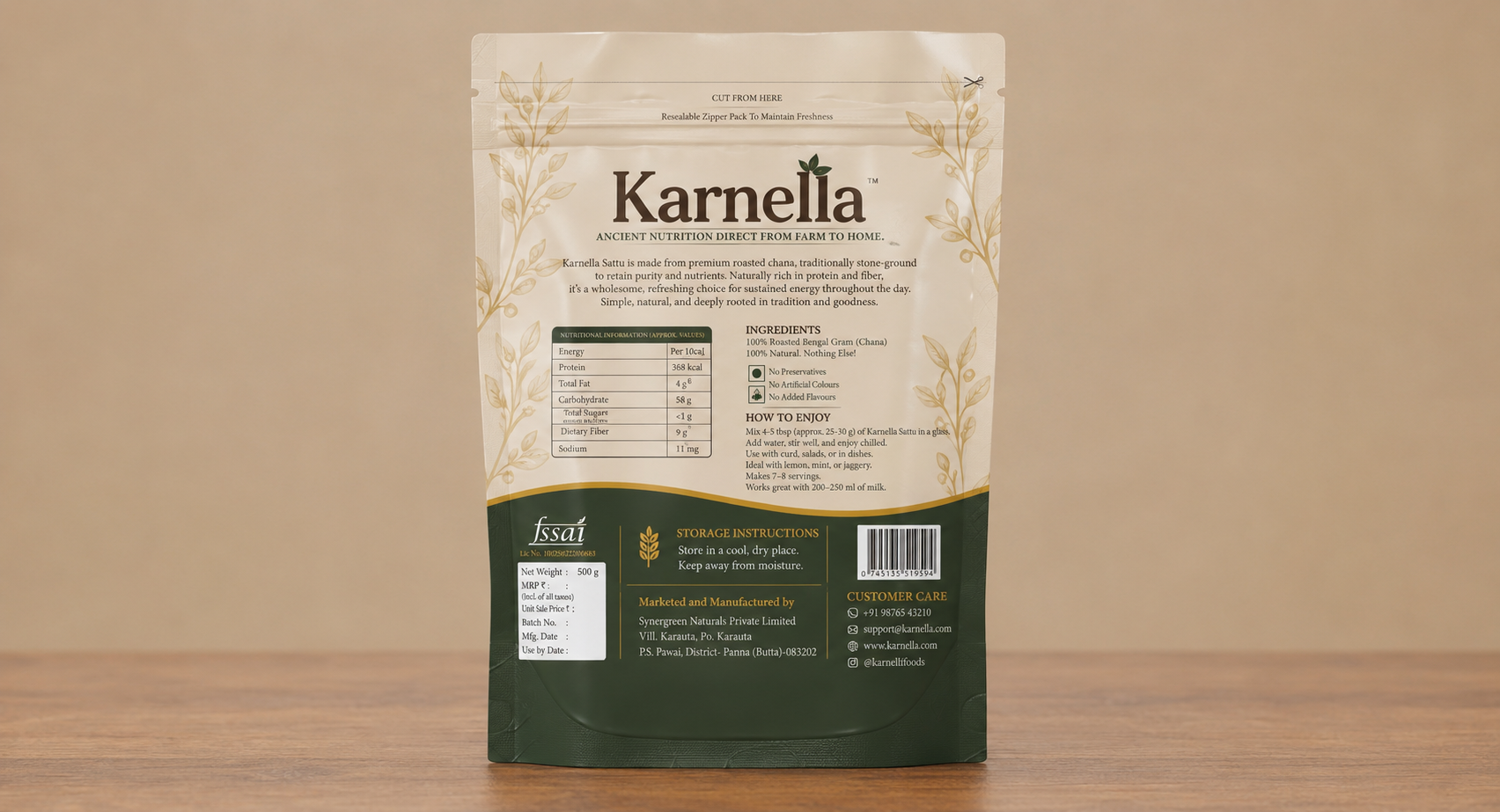
Values vary with the chana and how it is roasted, so always check the nutrition panel on your pack. Commonly quoted figures for chana sattu are:
| Per 100 g (approx.) | Amount |
|---|---|
| Protein | 20–25 g |
| Dietary fibre | 7–8 g |
| Energy | about 400 kcal |
| Also contains | Iron, magnesium, calcium and B vitamins |
A typical serving is 2–3 tablespoons (roughly 30 g), so one glass gives you about 6–7 g of plant protein along with a good amount of fibre.
6 benefits of sattu
1. Plant protein from a whole food
Gram for gram, roasted chana flour is one of the richer plant protein sources in the Indian kitchen. Unlike protein isolates, it comes with the fibre and minerals of the whole legume, which is why many people use a sattu drink mid-morning or after a workout.
2. Keeps you full for longer
The combination of protein and fibre slows digestion, so a glass of sattu tends to keep hunger away for longer than a sugary drink or snack. That makes it a popular swap for people trying to manage their weight, as part of a balanced diet.
3. Steady energy
Sattu's carbohydrates are complex and come packaged with fibre, so it is generally considered a low-to-moderate glycaemic food. In practice that means a slower, steadier release of energy, especially when you have it without added sugar.
4. Fibre for your gut
The fibre in sattu supports regular digestion. If you are not used to high-fibre foods, start small and drink enough water (see below).
5. A traditional summer cooler
In Bihar, a glass of salty sattu with lemon, roasted jeera and black salt is the go-to drink on hot afternoons. It is filling, easy to carry and needs no cooking. Our sattu drink recipes show you how to make it.
6. Simple, affordable and versatile
Pure sattu has just one ingredient. Beyond drinks, you can stuff it into parathas, roll it into laddoos with ghee and jaggery, add a spoonful to smoothies, or use it to thicken chillas and dough.
How much sattu should you have in a day?
Most healthy adults have 2–4 tablespoons (about 30–60 g) a day. If you are new to sattu, start with one tablespoon and build up over a week or two, drinking plenty of water as you go. Because it is high in fibre, having a lot all at once can cause bloating or gas.
Who should be careful
- Chickpea or legume allergy: avoid chana sattu.
- Sensitive digestion or IBS: start with small amounts and see how you feel.
- Kidney disease or a protein-restricted diet: speak to your doctor before having it regularly.
- Diabetes or any medical diet: sattu can fit into many diets, but check with your doctor or dietitian about portions, and skip the added sugar.
This article is general information about a food, not medical advice. Talk to a qualified professional about your own health.
How to choose good sattu
- Check the ingredients. Chana sattu should be just roasted Bengal gram. Some products are mixed with cheaper flours like maize or wheat.
- Look for a fresh, nutty smell and a fine, even texture.
- Store it airtight in a cool, dry place once opened.
Frequently asked questions
Can I drink sattu every day?
Yes, most people can have a glass a day as part of a balanced diet. Stick to 2–4 tablespoons and drink enough water.
What is the best time to have sattu?
Morning or mid-morning works well because it keeps you full. Many people also have it after exercise or as a cooler on hot afternoons.
Is sattu better than whey protein?
They are different. Whey is a concentrated protein from milk; sattu is a whole food with less protein per gram but more fibre and minerals, and it is plant-based. Many people use sattu as an everyday, minimally processed option.
Does sattu help with weight loss?
No single food causes weight loss. Sattu's protein and fibre help you feel full, which can make it easier to eat less overall, so it can be a useful part of a weight-management diet.